Black carbon and aerosols
From atmospheric eBC to rBC deposited in snow and ice
Preliminary results
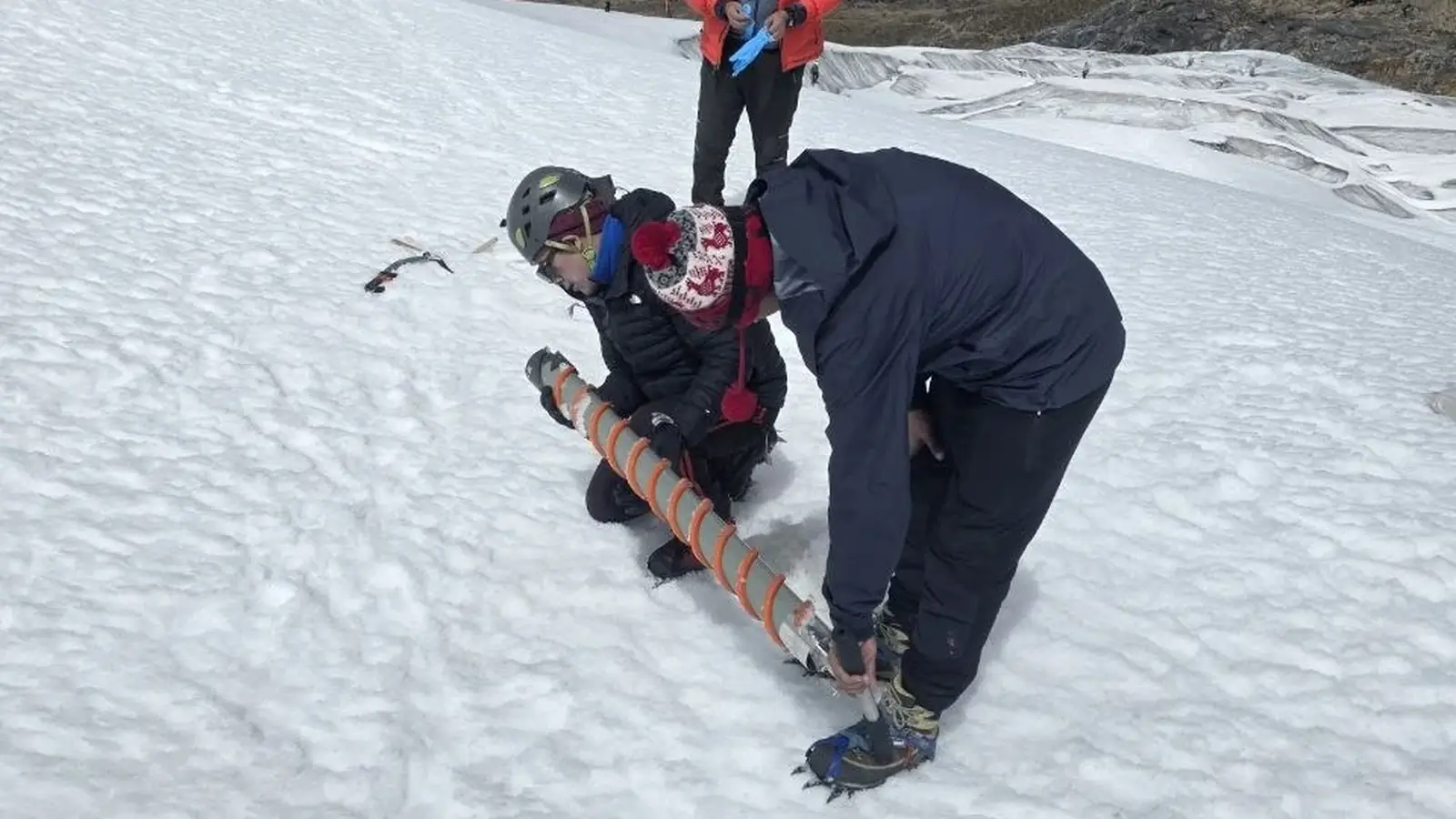
AL30 campaigns
Preliminary means were 174 ng m⁻³ for Huaytapallana Day 1, 654 ng m⁻³ for Day 2 and 222 ng m⁻³ for an instantaneous Quelccaya context measurement. Day 2 was 3.76 times Day 1, but this does not identify source or mechanism.
The raw series is retained. QA/QC quantifies negative values, evaluates ATN, flow and error codes, and compares moving smoothers with ONA-like processing. Session values are not climatologies or deposition rates.
AE33, SP2 and ions
A one-minute AE33 series is described for Huaytapallana in 2022–2024. SP2 measures refractory black carbon particle by particle in prepared snow/ice samples. Preliminary profiles and ion composition exist for Quelccaya/Vilcanota and Cordillera Blanca. No single ion uniquely identifies a source.
Open bridge
Atmospheric eBC → transport → rBC/ion deposition → albedo → melt must be assessed through synchronized windows and lags. Concentrations from different matrices are not directly equated.