Surface albedo and energy
Physical mechanism from darkening to potential melt
Implemented · numerical result not closed
Variables
The module calculates albedo, net shortwave and longwave radiation, net radiation, radiative surface temperature, potential melt energy and COSIPY forcing. Quisoquipina 2011–2024 contains the required variables, but a final consolidated energy-balance table is not yet available.
Energy mechanism
Darkening changes absorbed energy
The comparison is conceptual: the photographs were not taken at the same location or time. The control explores the change in absorption under 600 W m⁻² of incoming shortwave radiation.
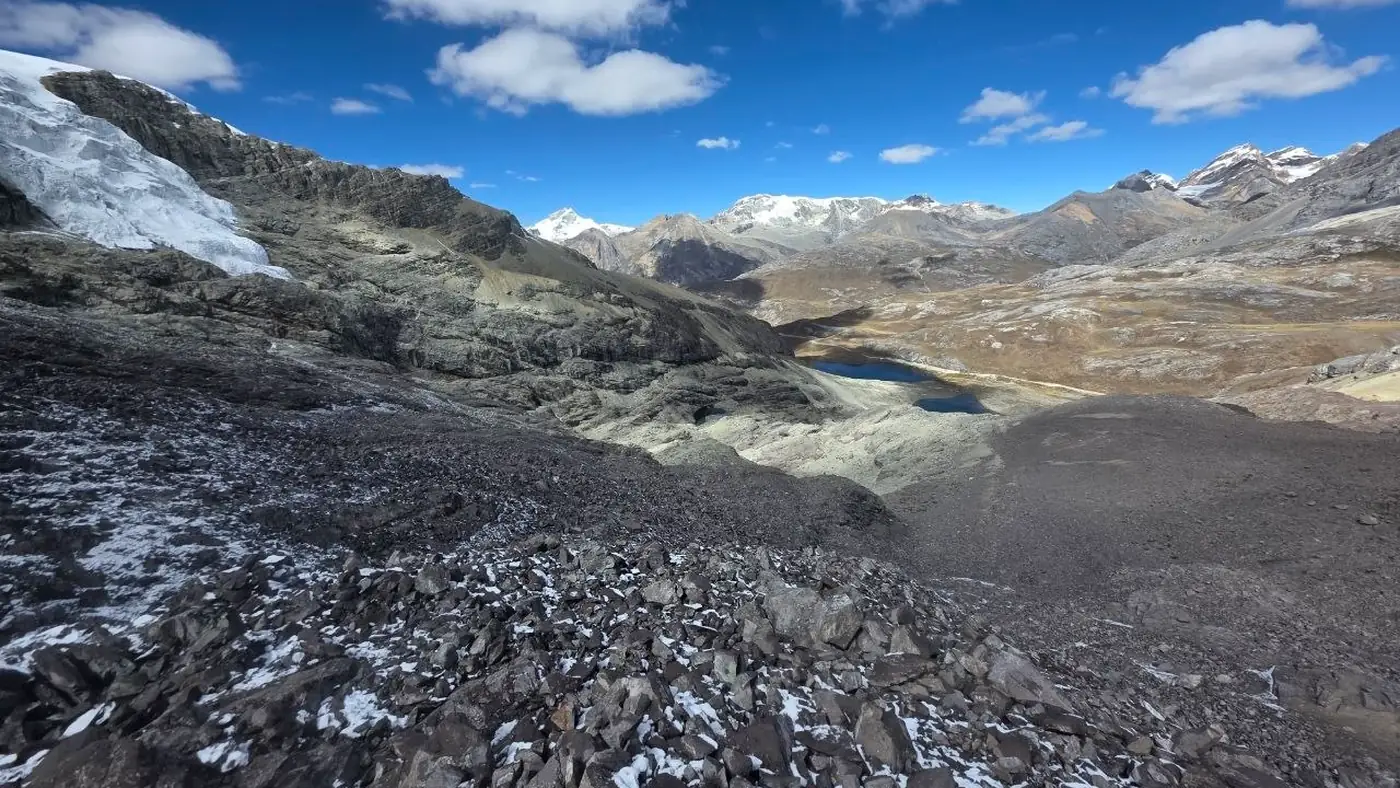
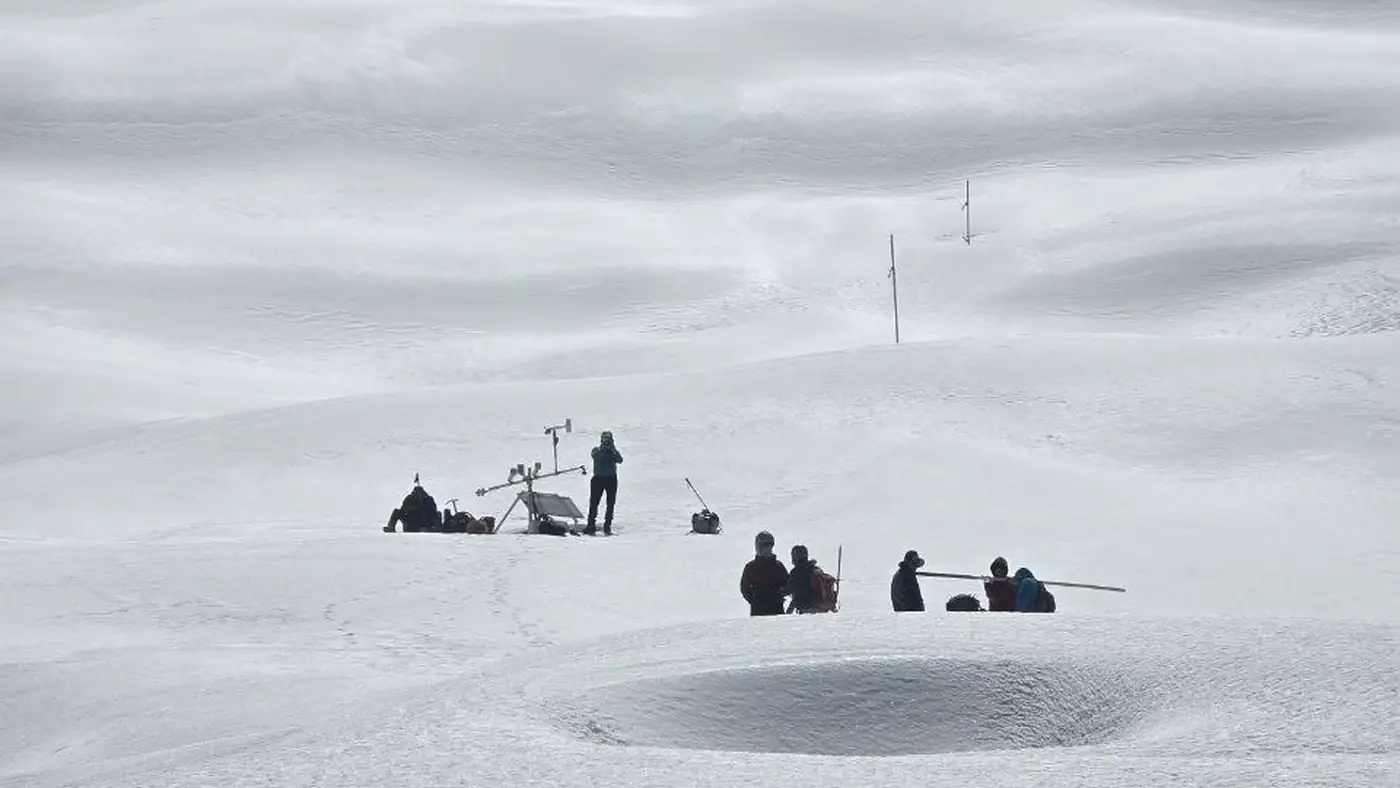 Clean surface · α ≈ 0.80 Darkened surface · α ≈ 0.45
Transparent sensitivity
An albedo reduction Δα = −0.05 under 600 W m⁻² incoming shortwave radiation increases instantaneous absorption by approximately 30 W m⁻². It cannot be extrapolated directly to daily melt without integrating solar geometry, cloudiness, thermal state and turbulent fluxes.
The result based on positive Rn must be called radiative potential melt or an energy scenario, not observed mass balance.